
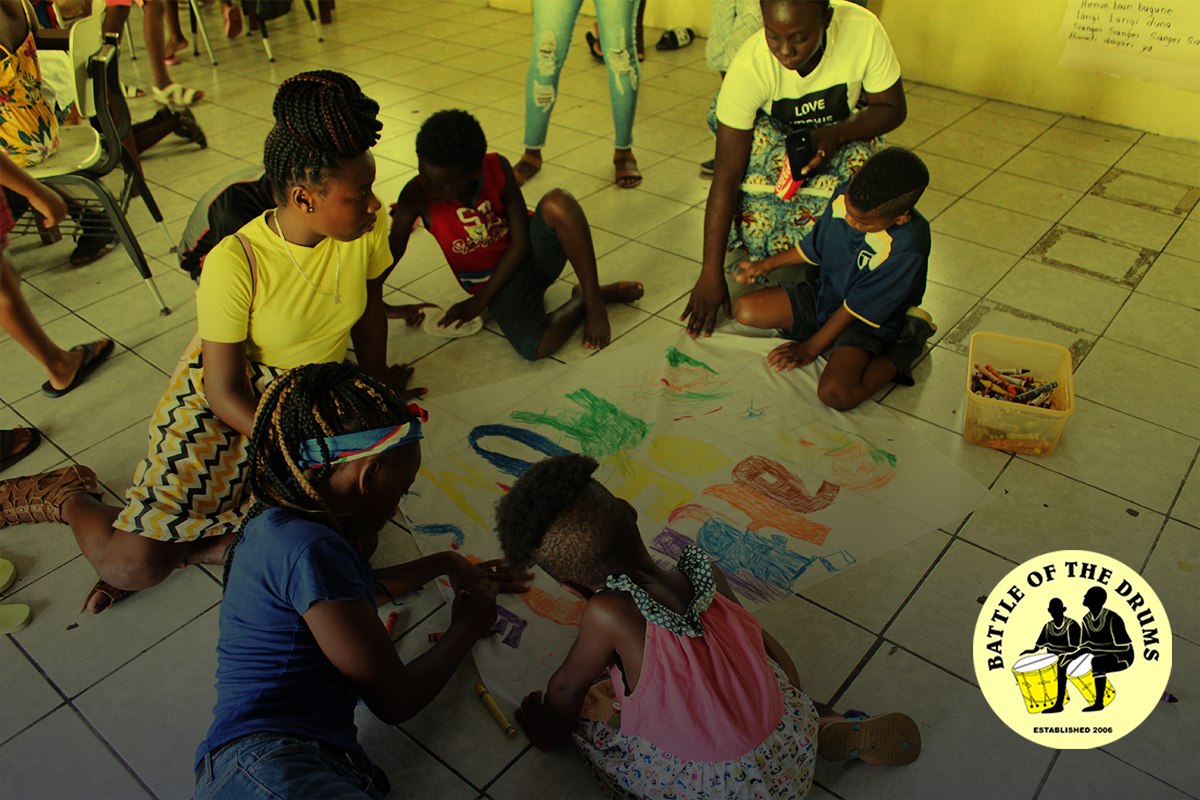
Garifuna Summer Camp: Exploring the Culture
Our Garifuna Summer Camp gives children a one-week immersion in language, drumming, singing, dance, and craft—the living skills that keep Garifuna culture strong. The Summer Camp blends daily classes with hands-on workshops so campers practice words and rhythms, learn stories and steps, and build confidence on and off the stage.
Why Garifuna Summer Camp matters
Children learn fastest when they engage their mind, body, and voice. At camp, they speak Garifuna in short, practical sessions, then apply vocabulary while they sing, drum, and dance. Each year, the Garifuna Summer camp focuses on a niche. Instructors set clear goals for each day, celebrate small wins, and help campers carry new skills back to school ensembles and community activities. This concentrated week jump-starts progress that weekly programs reinforce during the year.
What campers learn
Language & storytelling. Campers practice greetings, classroom phrases, song lyrics, and simple reading. Instructors connect words to movement and music so learning feels natural.
Drumming. Youths start with pulse and timekeeping, then build interlocking parts on garawoun, segunda, and primera. They learn technique, listening, and ensemble discipline.
Singing. Voice coaches guide breath, tone, call-and-response, and part singing. Campers learn cultural repertoire and how lyrics carry history and values.
Dance. Dancers teach posture, footwork, and form—from basic steps to small group choreography—always tied to the drum patterns and songs they’re learning.
Craft. In recent years, we brought in cultural experts from the community to teach crafts such as weaving.
How the week runs
-
Daily structure. Mornings emphasize language and vocal work; afternoons focus on rhythm and dance; late sessions bring everyone together for combined practice.
-
Grouping by level. We organize beginners and returning campers so instructors tailor technique, pacing, and repertoire.
-
Showcase Friday. Families and friends see what campers built together—an encouraging milestone that cements skills and pride.
What your support makes possible
-
Instruments & care: training drums, sticks, replacement heads, tuning and repair supplies.
-
Learning materials: lyric sheets, vocabulary cards, posters, choreography notes, and reference audio.
-
Instructors & assistants: stipends for coaches and support staff; time for prep, setup, and breakdown.
-
Space & logistics: safe venues, shade or indoor rooms, mats for dance, hydration, and first-aid.
-
Access: scholarships and local transport stipends so cost and distance don’t block participation.
-
Coordination & safety: registration, level placements, attendance tracking, and safeguarding protocols.
The impact you create
-
More campers are participating because scholarships, transport, and loaner instruments remove common barriers.
-
Faster skill growth as youth work intensively for a full week with clear goals and daily feedback.
-
Stronger school and community ensembles when campers return with fresh repertoire and better ensemble habits.
-
Deeper cultural pride as children use the language and perform music and dance tied to family and community identity.
Accountability you can expect
We track enrollment, daily attendance, instructor-to-student ratios, sessions delivered, materials issued, instrument maintenance, and the final showcase roster. We summarize these indicators after camp so supporters see exactly what their gifts enabled.
Ways to help today
-
Sponsor a camper. Provide a full or partial scholarship.
-
Equip a drum line. Underwrite instruments and maintenance for one training group.
-
Fund instructor time. Support coaches and assistants to maintain quality and safety.
-
Provide materials. Cover lyric/guide packs, vocabulary cards, and choreography notes.
-
Give monthly. Sustain the pipeline from camp to after-school programs and student showcases.